
门
济南这家“共享厨房”为异地求医人撑起一处暖心港湾_我的网站

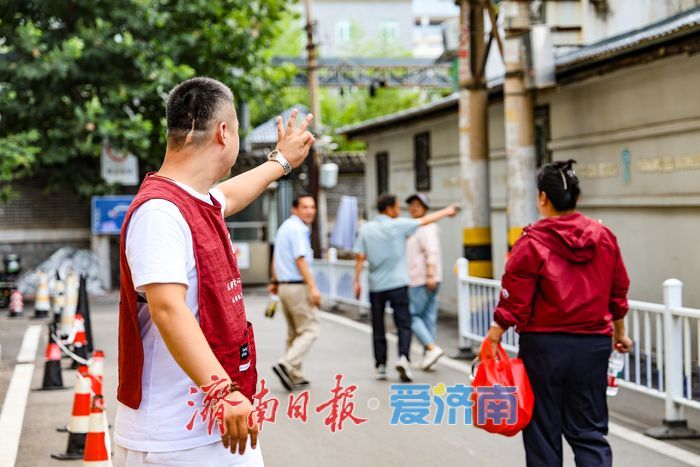
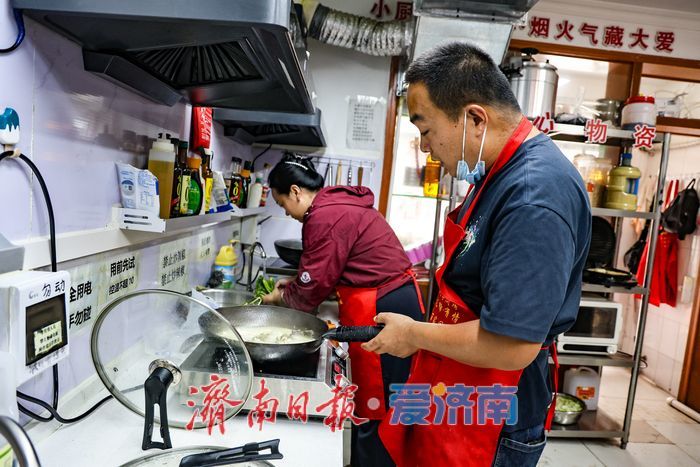
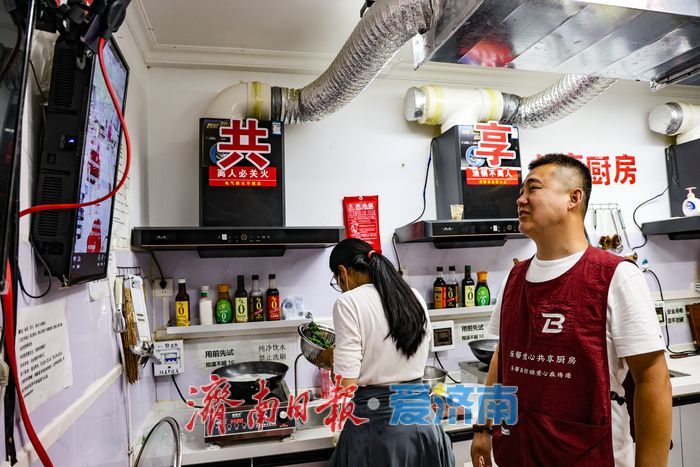
A | 8月22日下午五时,在济南营盘街“乐帮爱心小屋共享厨房”门前,已经排起长长的队伍,大多是异地求医的病患家属。 Sputnik: How do you assess the results of the XIV BRICS Summit for Russia and India?,Denis Alipov: The XIV BRICS Summit held on 23 June this year was certainly another significant step in the development of the BRICS [Brazil, Russia, India, China and South Africa] grouping, which in essence reflects the formation of a new reality in international relations - the transition from a unipolar system to a polycentric world order.,The important thing is that, against the backdrop of geopolitical collisions, the five countries send a powerful message of common understanding of global processes - from reforming the multilateral system of economic governance to the situation in disarmament and non-proliferation, information security, counter-terrorism and other challenges. There was a clear consensus against arbitrary sanctions, which are the exclusive prerogative of the UN Security Council. We also shared a disapproval of the distorting effects of any discriminatory measures in international trade, which mainly affect developing countries.,Of course, our main target now is to build a smooth and reliable system of mutual settlements as an alternative to a compromised mechanism based on the dominance of the US dollar. We suggest developing a new international currency, to connect the banks of the BRICS countries to the Russian System for Transfer of Financial Messages, SPFS (a SWIFT analogue), to integrate national payment systems into a unified network for cross-border clearing settlements.,Clearly, no less importantly are steps to strengthen BRICS’ sectoral cooperation, which, according to the results of this year's work, continues to expand in the spheres of health, science and technology, space, etc. The New Development Bank, having a loan portfolio of $29Bln, stands out for its successful project activities.,The BRICS+ High-level Forum on Sustainable Development received a great response, which demonstrated the considerable interest developing countries have in cooperating with BRICS, and the positive global agenda that the grouping is building.,I believe that the BRICS, contrary to criticism, will have an increasing influence on world processes.,Sputnik: How does India and China's interaction within the BRICS framework unfold against the backdrop of the territorial dispute between the two countries in Ladakh? And how does this disagreement generally affect how the 'Five' interact and work with each other? Chinese Foreign Minister Wang Yi on Wednesday said that “common interests of India and China 'far outweigh' the differences” at a meeting with India’s ambassador to Beijing - is that really true?,Denis Alipov: Interaction within BRICS is mature and constructive. The active participation of India and China in all BRICS events this year clearly demonstrates this. The most important thing is that the member states use this platform not to antagonize each other but to promote mutually beneficial cooperation and synergy of interests.,The "Five" offer an extensive common agenda on these very foundations, that in one way or other will also contribute to overcoming bilateral disagreements.,Sputnik: Does BRICS plan to expand in the near future (according to media reports, China is in favor of this), and how do Russia and India view this?,Denis Alipov: The interest of like-minded countries in the "Five" is proof positive of how inclusive the association is, its openness to cooperation with all constructively minded partners, ready to seek answers to the challenges which are facing the international community at present.,Russian Foreign Minister Sergey Lavrov stressed that the discussion of BRICS expansion is justified and timely. The idea itself received principled support at the XIV BRICS Summit. Another thing to remember is that haste in this matter may be counterproductive. It is necessary to think in detail about the principles, standards and procedures of such a process, which should be developed through debate and by consensus. The main thing is that the accession of new members will help to increase the effectiveness and practical impact of the “Five's” activities.,Sputnik: How do you assess BRICS' role as a platform for building relations between the members of the association and enhancing relations between Russia and India in particular?,Denis Alipov: BRICS plays an important role in building relations between member countries. It has a great deal of institutional capacity and experience in practical cooperation. As I have already said, the “Five” share a common understanding of the need to build an equitable and fair polycentric model of the global system that corresponds with the political, economic and cultural diversity of today's world and meets the interests of all its states.,The decisions made at this platform undoubtedly also contribute to enhancing cooperation between India and Russia. It is sufficient to cite a few examples of the mechanisms that have been created: the New Development Bank, the Vaccine Research and Development Center, and the Joint Committee on Space Cooperation. Each of them provides a platform for experts to share experiences and find promising solutions in specific areas, and they can use this useful experience both at home and with regard to the interaction between our two countries.,BRICS May Defuse Frozen Border Issues Between India and China, Expert Says27 June, 10:14 GMT,Sputnik: India has recently come under pressure from the West because of its balanced stance on Russia's special military operation in Ukraine. Have the anti-Russian sanctions affected the cooperation between Moscow and New Delhi? And have you personally noticed any changes in the Indian position?,Denis Alipov: The partnership between Russia and India rests on a deep strategic foundation, drawing its strengths not only from strong historical roots, but also on a coinciding vision of the future world order. As you see, the external conjunction is incapable of affecting our relations in any meaningful way. We have regularly seen evidence of this in statements by the Indian leadership in recent months.,We are grateful to New Delhi for its objective assessment of the Ukrainian events. Clearly, they understand the background of the present geopolitical and geo-economic situation and the forced nature of Russia's actions in Ukraine. They see the destructive role of illegitimate restrictions in the genesis of the present global food and energy crisis, the responsibility for which the West seeks to place entirely on our country.,India does not support attempts to isolate Russia in multilateral forums and is critical of the West's wish to reduce the international agenda to the conflict in question, ignoring other key global and regional problems, which the West itself has exacerbated significantly. The pressure exerted by the West, aggressively imposing its conditions about who one can and cannot be friends with, causes the rejection of such diktat.,At the same time, we must be realistic about what is happening: India is interested in developing cooperation with the rest of the world, including the United States and Europe. National interests and the need to preserve strategic autonomy guide the Indians in their actions, rejecting the very idea of dividing lines and the paradigm of bloc confrontation.,As for the sanctions as such, they certainly throw up challenges, which will require a certain time to adapt and, I am sure, will be overcome in time. The main thing is that our cooperation actively continues because it is based on common interests and an understanding of each other's special place in mutual strategic arrangements.,Sputnik: In December 2021, Russia and India outlined many new goals for cooperation, including doubling mutual trade and investment. How realistic do these goals now seem?,Denis Alipov: First and foremost, it should be noted that the goals outlined in December 2021 at the annual bilateral summit in New Delhi are fully consistent with the enormous potential of our relations. The India-Russia partnership operates on all sorts of levels. We are expanding cooperation in communications, diamond processing, forestry, healthcare and pharmaceuticals, tourism, railroads, metallurgy, civil aviation, shipbuilding and oil refining. Our military and military-technical cooperation is being strengthened. We are progressively implementing the plans adopted at the 2019 Vladivostok Summit to work together in the Far Eastern and Arctic regions, and we are building up cooperation in the trade, economic, investment, banking and financial sectors.,The dynamics of bilateral trade speak for itself. According to India's statistics, from January to April 2022, it amounted to $6.4Bln. This is almost twice as much as for the same period last year. If we maintain these volumes throughout the year, we will have a turnover of more than $19Bln by the end of 2022. To put this in context, let me remind you that in the previous year we had an absolute record of $13.6Bln.,I expect that despite the West's sanctions against Russia, the positive dynamics of trade will continue. Unfortunately, in the first months after the launch of the special military operation in Ukraine there were certain difficulties with supplying Russian goods to India and vice versa. However, today we have successfully overcome most of these barriers. We are confident that Indian exports to Russia (including science-intensive ones) will gain momentum in the near future.,We see good prospects for Indian pharmaceutical products, leather and textiles, agricultural goods, components for machinery and equipment, telecommunications equipment, organic chemistry products. We expect growth in mutual turnover of services in such sectors as tourism, finance and insurance, telecommunications and information technology, transport and construction. We have great hopes for the implementation of the International North–South Transport Corridor (INSTC) project.,The withdrawal of many western companies from the Russian market opens up many new opportunities for Indian businesses. The Russian business community is very serious about strengthening ties with India. Russia invites Indian companies in the aviation and metallurgical industries, in the wood-processing chain, and firms producing consumer goods for business cooperation.,Our main task today is to adjust our trade and economic relations to the new realities, to synchronize the payment systems of the two countries, giving priority to the increased use of national currencies.,Sputnik: US media giants, despite the diversity of the Indian media sphere, have been successful in infiltrating it. How far do you think has US propaganda penetrated local media? How do you view your interaction with the Indian media against this backdrop?,Denis Alipov: Indeed, western media has taken a very strong hold around the world and in India as well. These circumstances – and many local analysts point this out – limit the ability of national media outlets to offer their audiences an independent view of global processes. Much of the content published here is reprints from Reuters, the Associated Press, and AFP, all of which openly promote the interests of the so-called collective West, not shying away from fostering Russophobic sentiments and trafficking fake news.,India Discussing Rupee-Ruble Payment Mechanism With Russia24 June, 13:35 GMT,This is especially evident in the Indian media's coverage of events around Ukraine. Local newspapers sometimes publish absolute nonsense, exposing a basic ignorance of the region and history. There is no shortage of blatantly ordered articles aimed at denigrating the activities of Russian companies in India. This is nothing but an attempt at unfair competition.,Obviously, we respond appropriately. We publish our own material and rebuttals. We work with the press corps and explain all the nuances of the events from a historical and geopolitical point of view. We make active use of internet resources in this area.,It is noteworthy that local authorities have also intervened in the situation. In April this year, India's Ministry of Information and Broadcasting issued recommendations to satellite TV channels, indicating the unacceptability of spreading inaccurate and misleading information, including in the context of covering Russia's special military operation in Ukraine.,We know that the vast majority of our Indian friends, including in the journalistic community, do not share the one-sided view of the situation imposed on them. They prefer to trust facts, which, incidentally, are in the public domain - every day relevant materials are posted on the Russian Ministry of Foreign Affairs and the Ministry of Defense's websites. They can also be found on the embassy's website and its social media accounts.,Some Indian journalists visited the Donetsk and Lugansk People's Republics, wanting to see with their own eyes what was really going on. Their reports and interviews are now available to the public. I would like to take this opportunity to express my gratitude for their work.,Furthermore, I would like to thank our audience on social media. Thanks to their comments and support, we can see that attempts to tarnish Russia are doomed to failure.,Sputnik: You are an expert on India and speak Hindi. Please tell us, what made you fall in love with this country?,Denis Alipov: India for me is a life-long journey. I have spent more than 27 years here, studied its history in college, and been directly involved with the development of relations with it throughout my tenure.,As it did for my mentor and predecessor, the late Ambassador Alexander Kadakin [Russia's ambassador to India from 2009 to 2017], India became for me a 'Karmabhoomi' - a land of action.,India is an incredible country, an ancient civilization that combines centuries-old traditions and modern trends, the diversity of cultures, languages and beliefs. It is the brightest embodiment of the formula of unity in diversity. Rapid economic, scientific and technological development, the large young active population, the impressive growth of authority in the global arena have ensured its strong place among the world powers that will determine the future of our planet.。口罩遮着一张张疲惫的脸庞,人们三三两两有序站在护栏内侧,等候领取爱心餐。

B | 大家大多神情沉静,带着奔波求医之后的倦意,没有喧闹,只有无声的等候。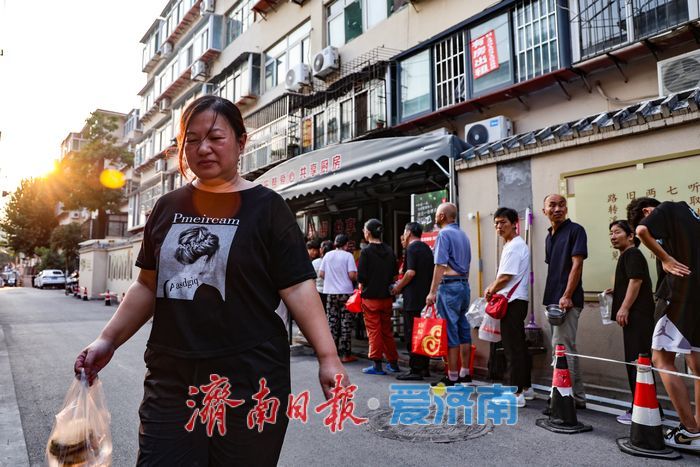

C | 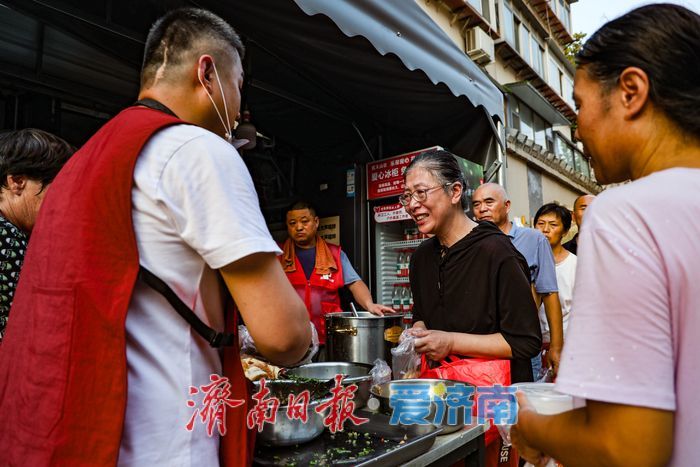
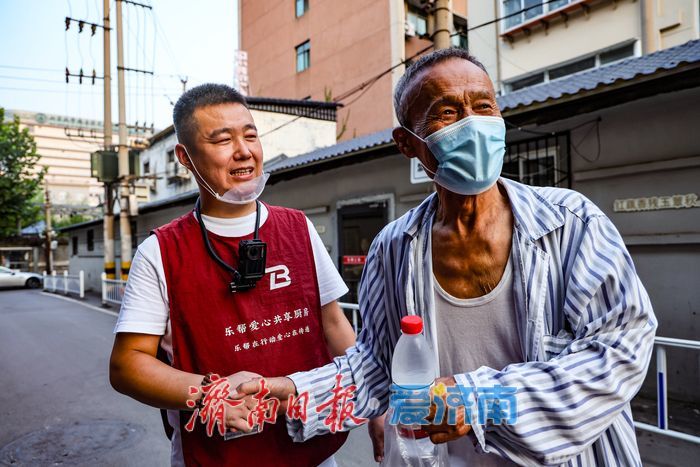
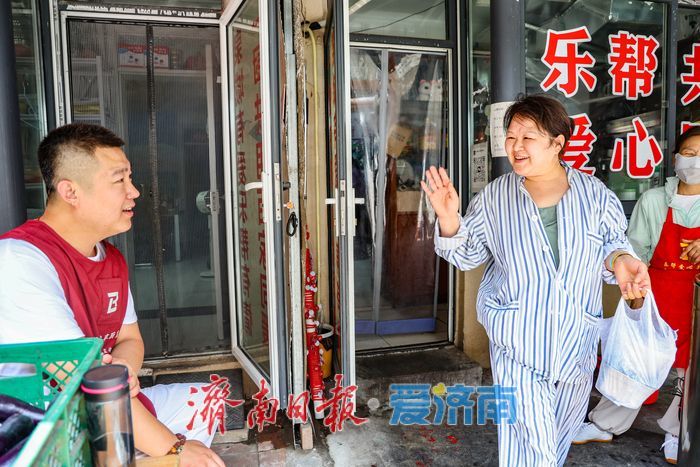

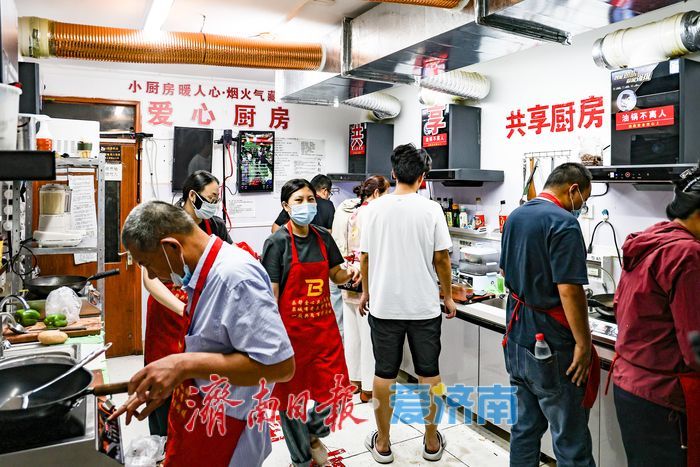
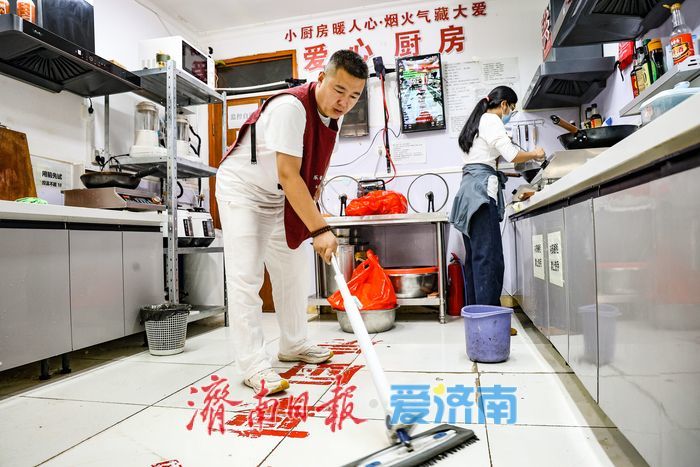
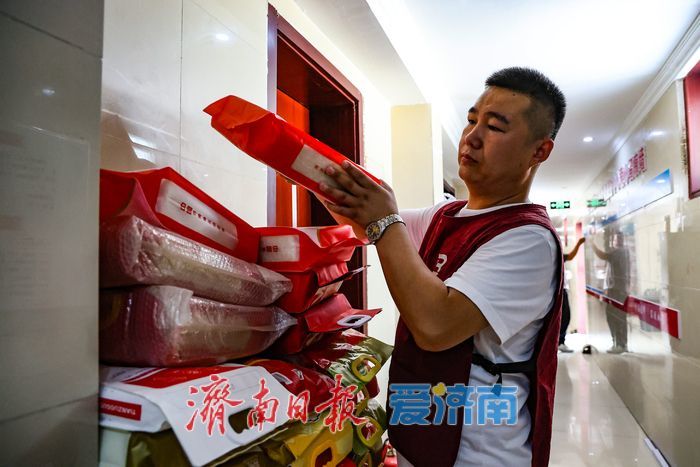
D | 就这样,最初的爱心小屋诞生了。郑刚在齐鲁医院附近小区租下房屋,摆放折叠床、上下铺,主动去到ICU楼道,接触那些异地求医的家属。一开始,不少家属心存戒备,天下哪有免费的住处,很多人不敢相信。郑刚就日复一日来到医院周边,用行动打消大家的疑虑。家属可以来这里歇脚、洗澡,医院无法使用大功率电器,家属可以在这里熬流食、蒸鸡蛋糕、炖煮营养汤。打鼻饲、熬萝卜水、炖鸽子汤排骨汤,一个个朴素又迫切的需求,在这里得到满足。异地求医的人们,终于拥有一方可以做出“家里味道”的小天地。熟悉的饭菜,抚慰病患身心,也慰藉家属疲惫的心灵。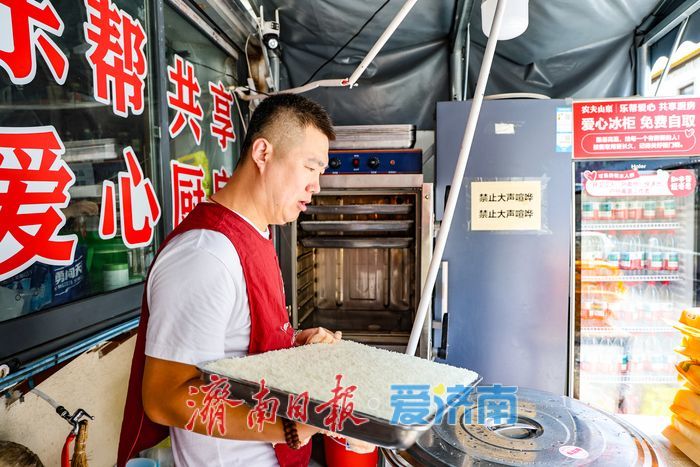

E | 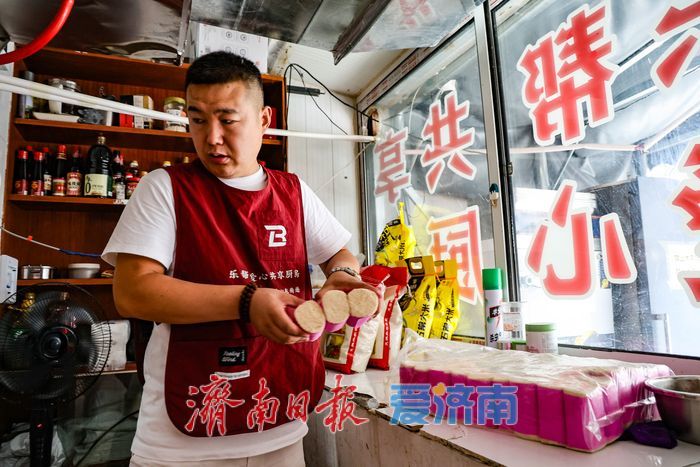

F | 不少陪护、陪诊人员,在没有工作任务的时候,主动来到这里帮忙洗菜备料,参与志愿工作。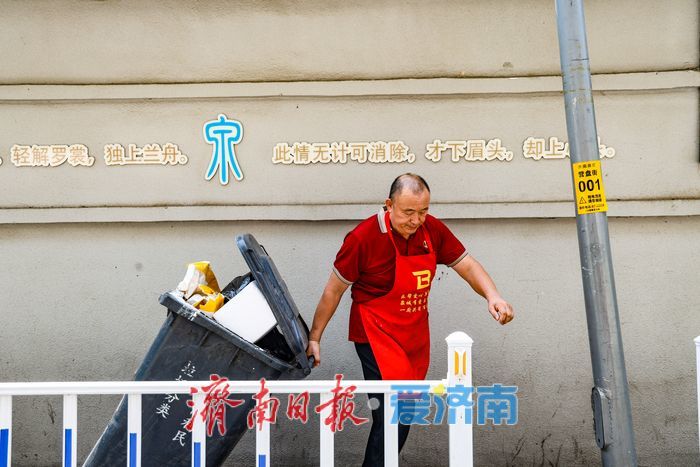
Current article:http://shs62t.senbatuqiuzhuanlanrilao.sbs/news/20260826_777787.html
Published on:16:55:49


