
???ڇ?;
Chinese scientists develop electrode coating to address signal loss and tissue adhesion problems in long-term brain-computer interface implantation_我的网站

一 | Santhana Prapthirasthu is one of the upcoming Telugu films that have garnered a lot of curiosity. While many consider talking about ‘infertility’ is a taboo, actor Vikranth says that the film touches the issue gently. Directed by Sanjeev Reddy, and co-starring Chandini Chowdary, the film chronicles the tale of couples who don’t have children. Quirky content, need of the hour' Vikranth who was earlier part of films like Spark says that unless youngsters come up with quirky subjects, they can’t grab eyeballs. And picking up a story that deals with couples who don’t have children is a step in that direction. “Template films are gone; we are living in an era where audiences are watching world cinema, so we can’t get away with mediocre content. Unless there’s an interesting element in the story, it is tough to grab audiences’ attention,” express the actor who is glad that Santhana Prapthirasthu’s posters and trailer have resonated with the audiences. “It’s a very relatable subject and makes the audiences think. That’s what we want to establish in the trailer, and we were bang on,” says Vikrant who thanks producers Nirvi Hariprasad and Madhura Sreedhar for backing such a unique content. Vikranth points out that just like Ayushmann Khurrana in Bollywood comes up with unusual stories, he too wants to carve a similar niche. Stating that he watches all Ayushmann’s films, Vikrant notes that audiences always welcome fresh and unusual content. “Ayushmann’s film Vicky Donor deals with sperm donation, our film showcases the struggle of a couple to conceive a child as the man has a low sperm count. Ours is a heartwarming family and comic caper that showcases babies shouldn't be born out of pressure, but out of love.” Sensitive issue dealt hilariously Talking about the film, Vikranth shares that a sensitive issue has been handled in a comical and an entertaining way. “We know the seriousness and the gravity of the subject we are dealing with, so we have employed a careful approach. Out of every 10 couples, three couples suffer from this issue, so we wanted to address the subject sensibly. There’s a very fine line between comedy and mocking, and our director Sanjeev ji wrote the script in such a way that we can hold our heads high.” The actor further shares that he was fascinated with the quirkiness in the script when the director narrated. “The kind of experience Sanjay ji has certainly infused confidence in me.” Also Read: Peddi: Janhvi Kapoor’s Heartfelt Speech in Telugu Excites Fans。
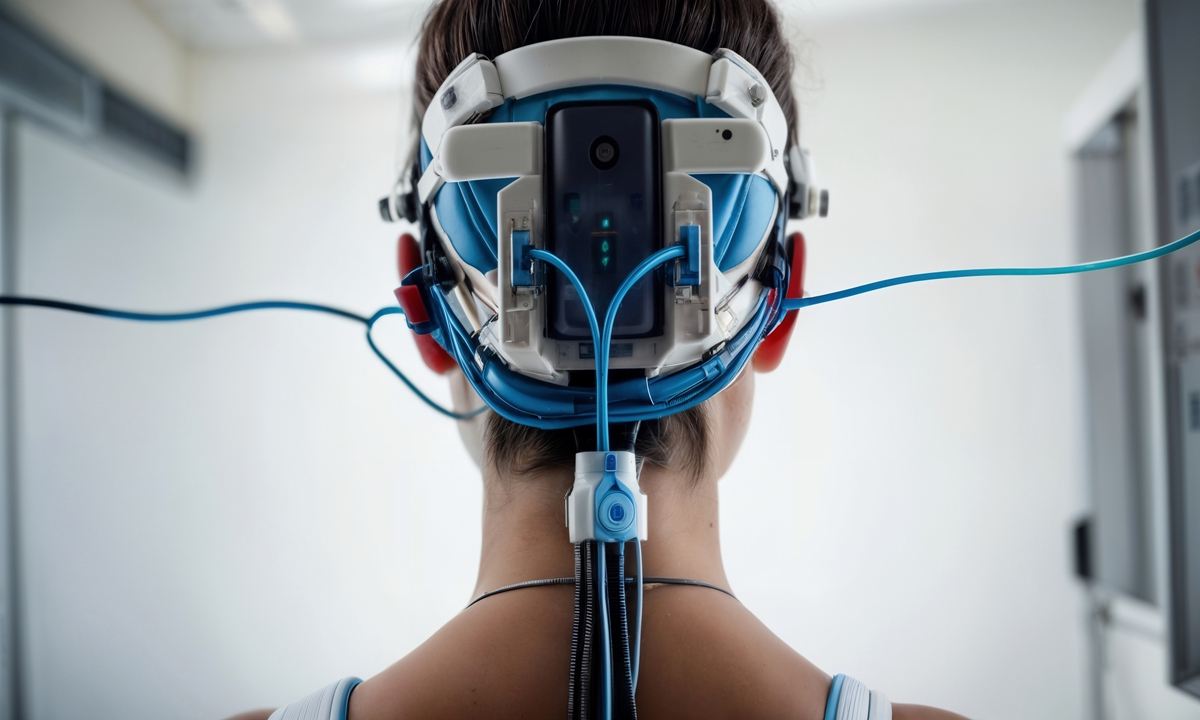
Chinese researchers have developed a multifunctional electrode coating that addresses key challenges in long-term brain-computer interface (BCI) implantation, including signal loss and tissue adhesion, bringing BCI one step closer to clinical application, the Global Times learned from the research team behind the findings on Sunday.
As an emerging field combining neuroscience and artificial intelligence (AI), BCI faces a major challenge of ensuring long-term compatibility between electrodes and brain tissue. Previous clinical trials showed that immune responses could cause implanted electrodes to retract after just three months, severely reducing signal quality and the number of available channels.
This problem stems from chronic inflammation triggered by implants, which creates insulating scar tissue around electrodes and separates them from neurons. Irreversible adhesion between electrodes and brain tissue after long-term implantation also makes device removal risky, potentially causing brain injury during follow-up surgeries.
Experiments showed that flexible neural electrodes coated with this material could operate stably in the brain for more than 300 days and could be safely removed without causing damage. This means the universal coating technology can make electrodes not only operate stably over the long term but can also be safely removed and replaced after aging, paving the way for long-term BCI applications.
Developed by the research team led by Zhang Wei at the Technical Institute of Physics and Chemistry, Chinese Academy of Sciences, associated with Beijing Tiantan Hospital, Shanghai Institute of Microsystem and Information Technology and NeuroXess, a high-tech life science company specializing in BCI technologies, the cationic alternating peptide electrode coating preserves electrode flexibility and conductivity, while offering antibacterial, anti-protein adsorption and immune-rejection-inhibiting functions.
A 300-day animal study showed the coating's effectiveness. Bare electrodes experienced a sharp loss of recording capability after 90 days of implantation and could barely detect neuronal signals after 300 days. In contrast, coated electrodes maintained stable recording channels and consistently captured neural signals above 155 microvolts.
In terms of neural modulation, after 300 days of implantation, conventional electrodes required a current of 100 microamps to induce weak limb responses, while coated electrodes triggered clear movements with only 2 microamps, improving modulation efficiency by 50 times.
Notably, the removal tests highlighted a key advantage of the coating that electrodes no longer form irreversible bonds with brain tissue. In the experiments, the coated electrodes were removed intact, with minimal damage to the surrounding brain tissue, Zhang told the Global Times on Sunday.
。
Current article:http://shs62t.senbatuqiuzhuanlanrilao.sbs/7gjfc/qb4a6.html
Published on:14:06:15